

Business Email Compromise: The Quiet Threat That Still Costs Businesses Millions
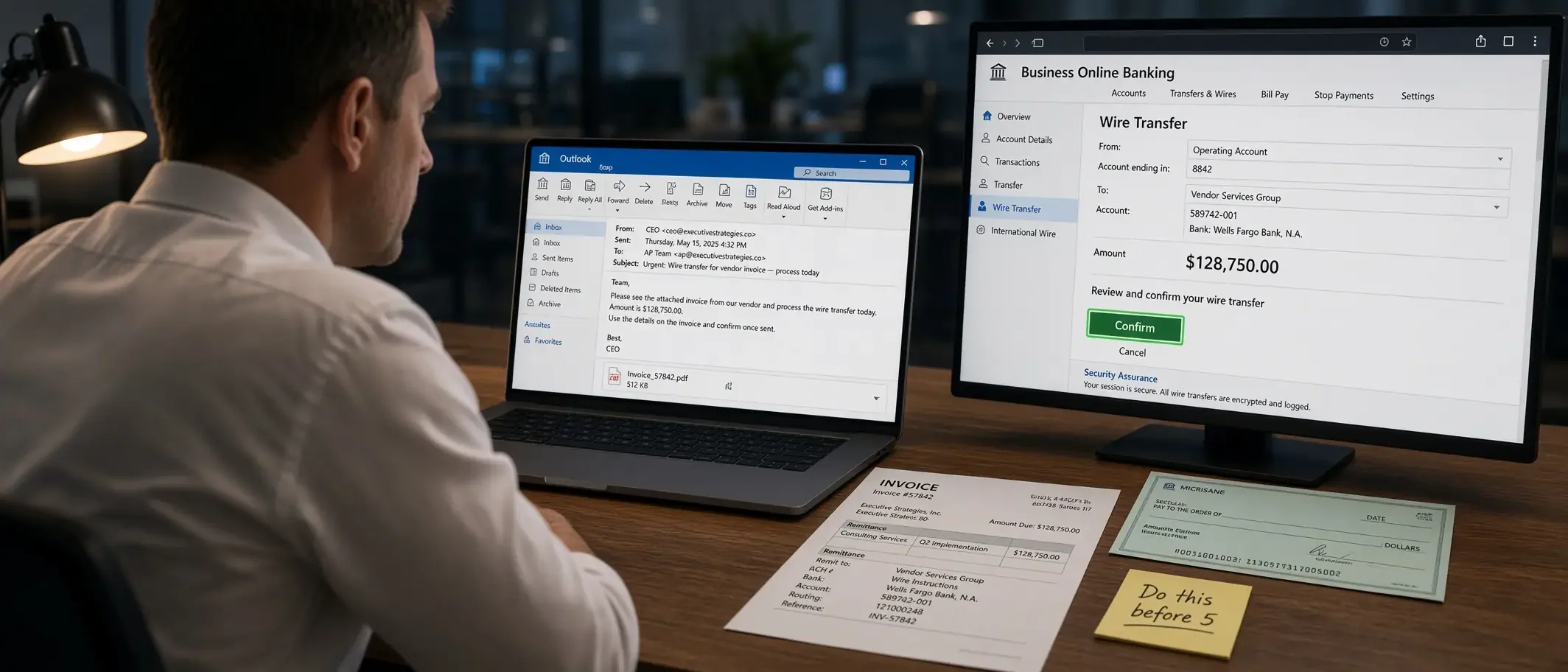
Most cyberattacks make noise. Ransomware locks screens. Phishing floods inboxes with obvious red flags. Business Email Compromise is different. It often looks ordinary, arrives at the right time, and asks for something that almost makes sense.
That’s why it keeps working.
What BEC Actually Looks Like in 2026
Business Email Compromise (BEC) is when attackers use email to trick someone into sending money, changing payment details, or handing over sensitive information. The classic version is the “CEO fraud” email: a message that appears to come from the boss asking finance to process an urgent wire transfer.
Today the tactics are more refined. Attackers frequently impersonate trusted vendors and request an invoice payment or a “quick update” to bank details. Others compromise a real mailbox and send messages from inside the organization. In many cases, they follow up with a phone call that uses AI voice cloning to sound like a known executive or supplier.
The emails themselves have improved too. AI helps attackers write cleaner, more context-aware messages that avoid the old spelling mistakes and awkward phrasing that used to give them away.
Why Small and Mid-Sized Businesses Are Frequent Targets
Large enterprises have layers of approval and dedicated fraud teams. Most SMBs do not. A single person in accounting or operations often handles payments, vendor relationships, and executive requests. That concentration of responsibility makes the attack surface smaller and more attractive.
Healthcare practices, professional services firms, retailers, and government contractors all handle regular payments and sensitive information. When an urgent-sounding request arrives from what appears to be a familiar source, the pressure to act quickly can override normal caution.
Common Patterns Worth Watching
A few recurring setups show up again and again:
A vendor “changes” banking information right before a large invoice is due.
An executive asks for a confidential or time-sensitive transfer while traveling.
A compromised internal account is used to request gift cards, payroll changes, or data.
A follow-up call or voicemail reinforces the email using a cloned voice.
The most effective attacks don’t feel technical. They feel administrative.
Practical Defenses That Still Work
Technology helps, but process matters more with BEC. A few habits make a measurable difference:
Verify out-of-band. Any request to change payment details or send money should be confirmed through a known, separate channel—preferably a phone number already on file, not one supplied in the email.
Slow down urgency. Attackers love deadlines. Building a short pause into financial processes gives people time to double-check.
Limit who can initiate or approve wires. Separation of duties remains one of the strongest controls available to smaller organizations.
Watch for mailbox rules. Attackers who compromise an account often create forwarding rules or hide folders to cover their tracks. Regular reviews catch this early.
Train for the conversation, not just the red flags. Staff should know it’s acceptable—and expected—to question unusual requests, even when they appear to come from leadership.
Multi-factor authentication is still necessary, but it is no longer sufficient on its own. Session hijacking and other bypass techniques are common, so MFA needs to be paired with stronger monitoring and process controls.
The Bottom Line
Business Email Compromise succeeds because it exploits trust and routine more than technology. The organizations that handle it best treat financial requests with healthy skepticism and give their people explicit permission to verify before acting.
If your current process for approving payments or changing vendor details relies mostly on email, it is worth reviewing. The next request that looks routine might not be.